🏡 Tiny Homes vs Traditional Homes NZ – 2026 Cost & Lifestyle Comparison
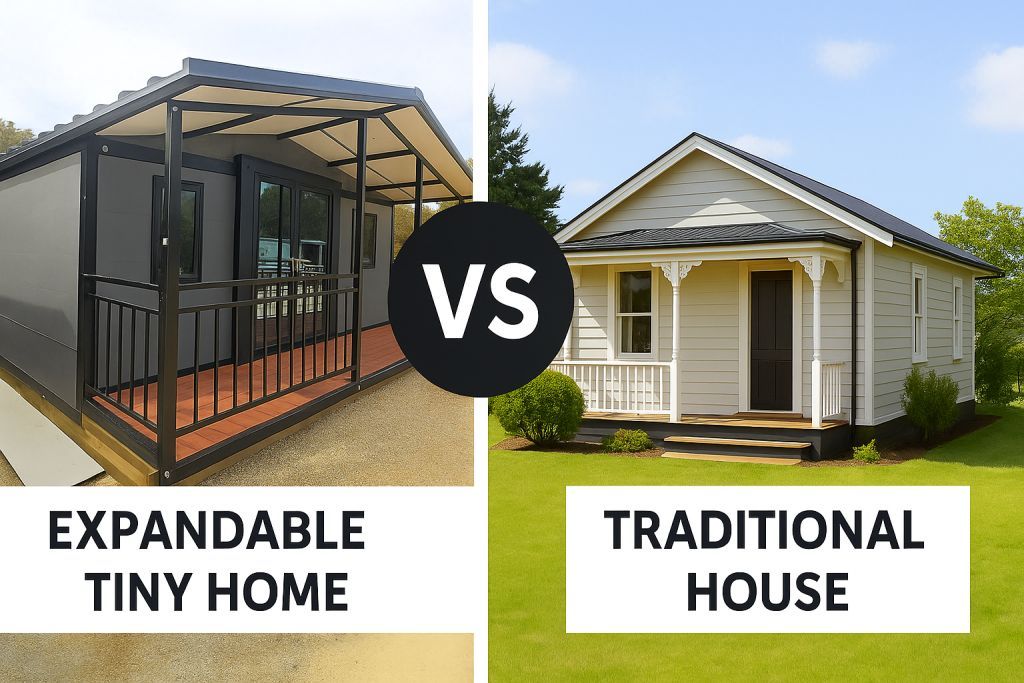
With house prices at record highs, more New Zealanders are asking whether a large mortgage is really worth it. The question of tiny homes vs traditional homes has become central to the housing debate. Portable Dwellings is leading the shift by building modern, affordable, portable homes that give Kiwis comfort, freedom, and financial control.
Cost Comparison – Tiny vs Traditional
A standard New Zealand build costs around $3,500–$4,000 per m², excluding land or council delays. By contrast, Portable Dwellings’ tiny homes average $900–$1,100 per m² .
| Model | Size | Price (incl GST) | Avg Cost per m² |
|---|---|---|---|
| The Cabin 13 m² | 20 ft | $23,500 | $1,800 /m² |
| 20 ft Premium Home | 27 m² | $40,500 | $1,500 /m² |
| 30 ft Premium 2-Bedroom | 54 m² | $51,000 | $925 /m² |
| 40 ft Expandable Home | 72 m² | from $59,000 – $64,000 | $850 /m² |
| Even with upgrades like decks, gable roofs, and insulation, you’ll still spend far less than on a conventional build — leaving more for travel, savings, or investment. For detailed pricing, see the Portable Homes Product Range. |
Build Time – Weeks Instead of Months
Traditional homes often take 8–12 months to finish once weather and subcontractors are considered. A tiny home NZ is factory-built, fully wired, and delivered within 6–8 weeks. You avoid on-site delays and move in faster, already insulated and ready for off-grid options such as solar power.
Energy Efficiency and Running Costs
Tiny homes use less power and maintain a stable temperature year-round. Add a CellX Solar 5 kW + 10 kWh battery system for total independence. Off-grid bundles start from $12,499 incl GST — saving about $2 – $3 k per year on electricity. Learn more about solar living in our Off-Grid Tiny Home NZ Guide.
Design Flexibility and Lifestyle
Every portable home NZ model can be customised — one to four bedrooms, gable roofs, bamboo interiors, or full-length decks. Homes can sit on foundations or stay movable, giving freedom that a fixed build can’t. Explore more ideas in the Tiny House Cost Breakdown 2026 blog.
Lifestyle Benefits – Living Smaller, Gaining More
Choosing tiny homes over traditional homes isn’t just about cost. It’s about lifestyle freedom: less maintenance, no clutter, and more time for what matters. Owners use them as full-time residences, holiday cabins, or Airbnb rentals. You still enjoy modern kitchens, stylish bathrooms, and excellent insulation — without being tied to debt.
Environmental Impact
Portable Dwellings builds with insulated steel frames and PIR panels (R 3.1 walls, R 6.6 roof) to reduce energy use by 60 percent.
Financial Independence
A $70 k portable dwelling replaces an $600 k mortgage. Many clients purchase outright or with minimal lending. Some invest in multiple units for rental or Airbnb income. It’s financial flexibility that big homes can’t match.
Real Story – From Traditional House to Tiny Home
Calab from Gore bought a 30 ft Premium Portable Dwelling with a gable roof . “We cleared our debt and now live off-grid with no bills. It’s the best decision we’ve ever made.”
Start Your Tiny Home Journey
Whether you’re downsizing, investing, or seeking energy independence, Portable Dwellings can design a home to fit your lifestyle. View models, compare layouts, or chat with our design team today.
👉 Get a Free Quote or message us on Facebook to start planning your affordable new home.
🧭 FAQ
Q1. How much cheaper is a tiny home than a traditional house?
Portable Dwellings’ tiny homes cost 60–70 percent less per m² than a standard build.
Q2. How long does it take to build?
Factory construction takes 6–8 weeks versus 8–12 months for a traditional house.
Q3. Can tiny homes be lived in full-time?
Yes. All models meet NZ electrical, plumbing, and insulation standards for year-round living.
Q4. Are tiny homes environmentally friendly?
Absolutely. With solar options and efficient insulation, they use less energy and produce minimal waste.